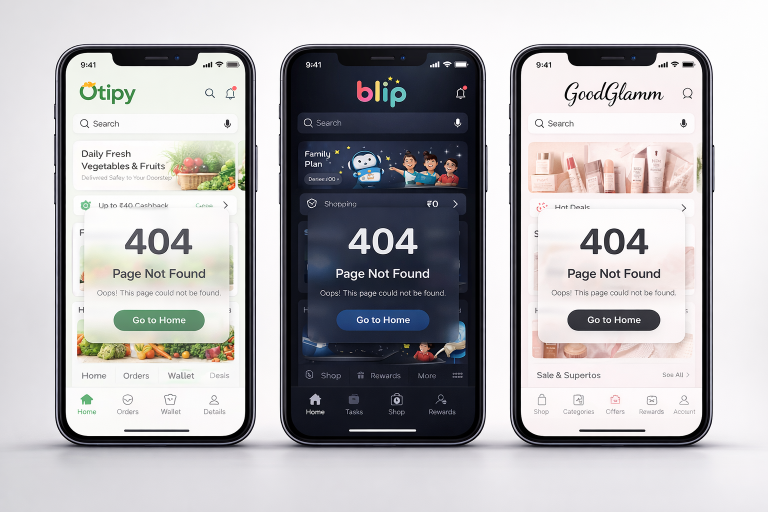

Not every startup fails.
Some don’t shut down.
They don’t run out of money.
They don’t make headlines.
They just… stop growing.
No press release. No dramatic collapse. Just flat or declining numbers, slower product updates, and growing silence on growth metrics.
If you’ve followed the Indian startup ecosystem through 2025–26, you’ve noticed this pattern far more often than flashy shutdown stories.
The Startups That Look Alive — But Aren’t Moving
India has spawned thousands of startups in SaaS, D2C, fintech, and AI. A few scaled explosively. Many failed loudly. But a significant chunk settled into an uncomfortable middle ground:
- Still operating
- Still active on LinkedIn and social media
- Still “building in public”
Yet revenue has stalled or declined, user growth has flattened, and real momentum has evaporated.
They didn’t fail. They just… stopped.
Real Examples You’ve Probably Seen
The SaaS Tool That Launched Strong… Then Plateaued
Hundreds of Indian SaaS products enjoyed early Product Hunt traction and initial sign-ups. But as enterprises began demanding deeper AI integration and consolidated their tech stacks in 2025, many non-AI-native tools saw gradual slowdowns in new customers and usage. Industry observers noted a clear split: AI-first SaaS companies moved ahead, while traditional ones faced slow decline or consolidation pressure. Many remain operational with periodic updates — but the growth engine has stalled.
The D2C Brand That Scaled Ads But Not Loyalty
Sugar Cosmetics is a textbook case. The brand built strong early momentum through influencer marketing and bold positioning, crossing ₹505 crore in revenue in FY24. But in FY25, revenue dropped 17.8% to ₹415 crore amid rising competition, higher ad costs, and challenges in translating digital hype into sustained offline + online loyalty. Losses widened and EBITDA turned negative. The company is now on a course-correction path, but scaling has clearly paused.
Similarly, many D2C players remain trapped in the lower revenue bands. According to DSG Consumer Partners’ analysis of 100+ founders, 60–65% of Indian D2C brands are still stuck in the ₹1–50 crore range, struggling to cross ₹100 crore sustainably.
The “AI Startup” That Launched Fast — But Blended In
The 2024–25 AI wave led to a flood of “AI-powered” tools — many with similar interfaces, similar use cases, and limited differentiation. While India’s GenAI startup count surged 3.7x to over 890 by mid-2025, most application-layer players faced slow enterprise adoption, localisation challenges, and difficulty moving beyond pilots. Many are still shipping minor updates and staying active, but breakout growth and retention have stalled for the majority.
What’s Actually Causing This?
This plateau isn’t bad luck. Clear, repeatable reasons stand out:
Early Traction ≠ Sustainable Product-Market Fit
Initial users and revenue create excitement, but consistent demand beyond early adopters is much harder. Many never crossed that chasm.
Distribution Was Never Systematised
Early growth often relied on founder networks, launch spikes, or cheap digital ads. Without repeatable, cost-effective channels, acquisition became expensive and unpredictable.
“Keep Building” Instead of Solving the Core Problem Better
When growth slows, teams default to adding features and UI tweaks. Users, however, reward deeper solutions to painful problems — not more bells and whistles.
Everyone Building the Same Thing
In SaaS and AI especially, dozens of startups chased identical “AI for X” ideas. Without clear differentiation, users saw little reason to switch or stick.
Founder Energy and Urgency Fade
After years of intense hustle, the fire dims. Risk appetite drops, decisions slow, and the startup slips into “comfortable” mode. Comfort is silent growth poison.
Why Stagnation Is More Dangerous Than Failure
Failure is loud and forces decisive action — shutdown, pivot, or move on.
Stagnation offers no such pressure. No urgent deadline. No clear breaking point. Founders often stay trapped for years in incremental tweaks and quiet hope.
Can These Startups Recover? Yes — But Only with Fundamental Change
Recovery demands more than small improvements. It requires rethinking the business.
Positive examples from the same period show what works:
Chaayos, the IIT-alumni-founded tea café chain, saw largely flat growth in FY24 but rebounded strongly in FY25. Revenue grew 25% to over ₹310 crore (some reports cite ~₹330 crore including other income), while net losses narrowed 53% to ₹25.4 crore and EBITDA jumped 6.5x through tighter cost control, operational discipline, and improved unit economics. They didn’t just “add more cafés” — they fixed efficiency first.
Wakefit slashed net losses by 90% to ₹15 crore in FY24 on ₹1,017 crore revenue through better supply chain and cost management, before seeing revenue climb further to ₹1,274 crore in FY25 (though losses widened again due to higher ad and employee spend as they prepared for IPO). The lesson: operational overhauls can restore momentum when executed rigorously.
The startups that break out of the plateau don’t merely iterate. They rethink target segments, rebuild distribution, simplify the product, and refocus on the core problem with fresh urgency.
The Bigger Shift Happening in 2026
The easy-funding, growth-at-all-costs era has ended. Competition is sharper, users have abundant choices, and capital is disciplined.
Instead of dramatic failures, we’re seeing more silent stalls. In 2026, this “alive but not growing” state risks becoming the default outcome for many Indian startups — especially in SaaS, D2C, and the crowded AI application layer.
FAQs
Why do startups stop growing?
They mistake early traction for lasting demand, fail to build scalable distribution, lack meaningful differentiation, or lose founder urgency over time.
What exactly is a plateaued startup?
One that continues operating with regular activity but shows no meaningful growth in revenue, users, or market momentum — often for multiple quarters or years.
Is this common in India?
Very. Especially in SaaS (facing AI-driven consolidation), D2C (where 60–65% remain below ₹100 crore), and AI tools (where many struggle beyond pilots).
Can a stagnant startup regain momentum?
Yes — but only through major resets (like Chaayos’ efficiency drive or Wakefit’s cost restructuring), not incremental feature additions.
Final Thought
Not every startup journey ends in unicorn success or spectacular failure.
Many simply linger in the middle — alive on paper, posting updates, but no longer progressing.
In 2026, that quiet plateau might be the most common story in the Indian startup ecosystem.
Have you seen (or worked at) startups stuck in this zone?
VentureBrief — Cutting Through The Startup Noise